

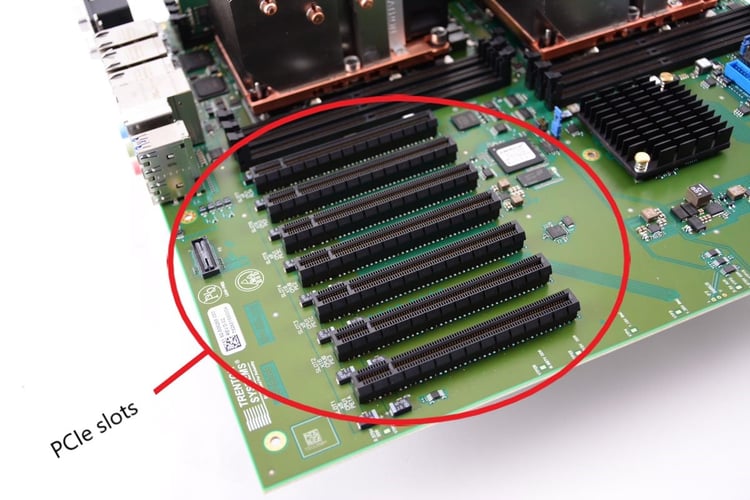
PCIe Slots Shown Here
|
| PCIe Slots Shown Here |
Introduction
If you've ever tried to add more than one graphics card to your computer, then you know that it can be an expensive and frustrating experience. The good news is that there's now an easy way to do this with PCIe-based expansion slots, which are available on most modern motherboards.
PCI-Express is the next generation of high-speed expansion slots.
PCI-Express is the next generation of high-speed expansion slots. It was introduced alongside the Unified Extensible Firmware Interface (UEFI) in 2004 and is used to connect high-performance devices such as graphics cards and hard drives to a computer's motherboard. The PCIe architecture provides a series of pins that can be shared within a computing system for multiple purposes, including power delivery, connectivity and communication between devices; this allows users access to additional bandwidth while also increasing overall performance.
It was introduced alongside the Unified Extensible Firmware Interface (UEFI) in 2004.
You may be wondering what the difference is between BIOS and UEFI. The answer lies in the standards that these two technologies use to communicate with each other.
The Unified Extensible Firmware Interface (UEFI) was introduced alongside the Unified Extensible Firmware Interface (UEFI) in 2004, when it was first recognized as a Draft Standard by International Organization for Standardization (ISO). It's also known as E12 or Embedded Controller Architecture (ECA), which stands for Embedded Controller Extension 12. This specification has been developed by Intel, Microsoft and Phoenix Technologies along with several other companies such as AMD/ATI Technologies and VIA Technologies.
The PCIe architecture provides a series of pins that can be shared within a computing system for multiple purposes.
PCI Express is a serial bus interface for connecting devices to a computer. It was introduced alongside the Unified Extensible Firmware Interface (UEFI) in 2004, and it has been developed since then to become one of the most common ways for connecting various types of devices to computers.
PCI Express works by using physical lanes on an expansion card; each lane can carry up to four data streams at 1GB/s each. Physical lanes are independent from other buses such as PCIe or DDR4, so you can use any combination of these technologies together via one card slot or multiple cards connected via either type of connection (means that you don't need special software drivers).
One of the most popular uses for this architecture is video capture, where multiple monitors are connected to one video card.
One of the most popular uses for this architecture is video capture, where multiple monitors are connected to one video card. The PCIe x16 (or x1) slot on your computer can be used as a primary display or as an audio card that provides integrated audio support.
The PCIe interface runs at speeds up to 4 gigabits per second (Gbps). This means it can transfer data at rates much faster than USB 3.0, which runs at 1 Gbps.
A PCI Express x16 slot will have four lanes (eight data lanes and two control lanes).
A PCI Express x16 slot will have four lanes (eight data lanes and two control lanes). A PCI Express x1 slot has only one lane. The advantage of using a legacy card is that you can use an old motherboard, but there are some disadvantages as well. The main disadvantage is that it will take longer for your computer to start up because there are more components on the motherboard than just memory and hard drives, which means more components need to be activated before they can start working properly; this can take up quite a bit of time when using older computers or laptops with slow processors or storage drives that aren't as fast as newer models running at higher speeds. You also have less room in terms of available memory compared to newer systems because there's no longer any room left over after installing all those extra components needed in order for everything else inside your computer system (like graphics cards)
An x4 slot will have four lanes (two data lanes and two control lanes).
An x4 slot will have four lanes (two data lanes and two control lanes). This is used for lower bandwidth devices like SSDs and is rated to support up to 4 GB/s of bandwidth.
The number of external ports available depends on the type of bus used in the PC (PCIe or PCIe Gen 2.) There are six PCIe Gen 1 slots on an R9 290X and five PCIe Gen 2 sockets on an R7 265, but only three Gen 1 sockets are available on an RX 480 as it uses a PCIe 3.0 connection and only two Gen 2 expansion slots on it as well as a single Gen 3 socket which is shared by all three card types. This means that an RX 480 has eight total external interfaces provided through two x16 slots, one x8 slot, one x4 slot and one single x1 or legacy PCI-E port depending on the motherboard being used with it.
PCI-Express is the next generation of high-speed expansion slots. It was introduced alongside the Unified Extensible Firmware Interface (UEFI) in 2004 and provides a series of pins that can be shared within a computing system for multiple purposes. These include:
Peripheral component interconnect (PCIe)
QuickPath Interconnect (QPI)
Conclusion
The general consensus is that PCIe Gen 2 is the future of expansion slots. It provides higher speeds, increased power efficiency and lower latencies than its predecessor. However, it's still not quite as fast as Thunderbolt 3 which can transfer data at up to 20Gbps (gigabits per second).






No comments:
Post a Comment